Total Carbon Analyzer: TOC-L CSH with autosampler ASI-L Shimadzu
Quantification of Organic, Inorganic and Total Carbon in fresh and/or saltwater samples.
Article 1: equipment and technique general information
Modules: Total Carbon Analyzer TOC-L CSH (Cat. No.: 638-91111-58, serial No.: H 54425300539 AE) Shimadzu with autosampler ASI-L (P/N: 638-93200-58, serial No.: H 57415200737 SA) Shimadzu.
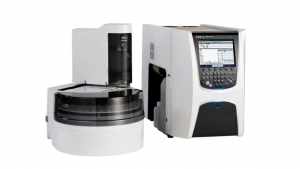 Figure 1. Total Carbon Analyzer TOC-L CSH and autosampler ASI-L
The Shimadzu TOC-L CSH Total Carbon Analyzer is an instrument designed for the quantification of dissolved carbon in water samples, both fresh and saltwater.
This instrument analyzes different carbon fractions: Total Organic Carbon (TOC), corresponding to the total carbon present in organic compounds in water (natural organic matter, organic pollutants, hydrocarbons, etc.); Dissolved Organic Carbon (DOC), corresponding to carbon present in organic compounds dissolved in water; Inorganic Carbon (IC), referring to carbon present in inorganic forms (dissolved carbon dioxide, carbonates, and bicarbonates); and Total Carbon (TC), which is the sum of all carbon present (organic + inorganic).
The equipment has an autosampler (ASI-L) for sample injection, using vials (Figure 2) with a capacity of 40 mL hermetically sealed with silicone septa.
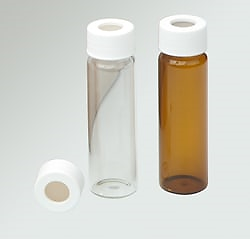
Figure 2. 40 mL capacity vial, Shimadzu, glass (clear/amber) 27.5 mm (diameter) x 95 mm (height), with hermetic septum seal (PTFE/silicone) 3.2 mm thick, compatible with mounting and sealing in TOC-L and ASI-L autosampler. (P/N 226-50582-00) (https://www.shopshimadzu.com/product/s227-34039-01)
Measurement techniques: it quantifies the different carbon fractions through a high-temperature catalytic oxidation process or acidification and subsequent detection by non-dispersive infrared (NDIR)
TC determination: The liquid sample is injected into a high-temperature combustion furnace (680 °C) in the presence of a catalyst; all the carbon present (organic and inorganic) is oxidized to carbon dioxide (CO₂). The generated CO₂ is carried by a carrier gas to the NDIR detector, where it is quantified.
IC determination: The sample is acidified, releasing inorganic carbon (present as dissolved CO₂, carbonates, and bicarbonates). The released CO₂ is led to the NDIR detector for measurement.
Organic Carbon → cat.ox → CO2 (NDIR detection)
Inorganic Carbon (CO2, HCO3, H2CO3) → cat.ox / H+ (acidification) → CO2 (NDIR detection)
Total Organic Carbon (TOC/DOC) calculation: The equipment calculates TOC as the difference between TC and IC: TOC = TC − IC.
For the quantification of carbon in water, the equipment uses standard solutions of sodium carbonate (Na₂CO₃) p.a Anedra and sodium bicarbonate (NaHCO₃) p.a Anedra to calibrate Inorganic Carbon (IC), and potassium biphthalate (KHC₈H₄O₄) p.a Anedra to calibrate Total Carbon (TC).
The measurement range is approximately from 4 µg C /L to 30 g C /L. The detection limit is approximately 4 µg C /L of organic carbon.
The Laboratorio de Análisis de Isótopos Estables (LAIE) offers the quantification of TOC, DOC, IC and TC in water samples (fresh and/or saltwater). It also provides specific recommendations on the sampling protocol and necessary storage conditions, adjusted to the requested analysis, in order to guarantee traceability of the obtained results.
Article 2: Service request
1.- For researchers/fellows belonging to IIMYC:
The initial service management must be carried out exclusively through the IIMYC's Internal Tickets system:
www.IIMYC.gob.ar → IIMYC internal → service request → send ticket → "isótopos estables/TOC-L" CPA Agustina Pardini.
The request ticket must clearly specify the type of analysis required (TOC, DOC, IC, TC), as well as the corresponding sample type (seawater, estuarine, river, lake, drinking water, etc.). Likewise, a contact email address must be provided to facilitate communication with the LAIE.
2.- For service applicants external to IIMYC:
The initial management must be done by email (laie.iimyc@mdp.edu.ar or agustinapardini@mdp.edu.ar) with the subject "carbon in water".
The body of the email must clearly specify the type of analysis required (TOC, DOC, IC, TC), as well as the corresponding sample type (seawater, estuarine, river, lake, drinking water, etc.).
Within a period not exceeding 72 hours, a response will be sent to the email indicated in the ticket query, along with an attached Excel file. This file must be completed by the applicant, including: work group data, name of the responsible director, sample status in relation to the requested analysis, among other important required fields. It will specify the label to be included on each sample sent to the laboratory for analysis. This label must be present without exception.
The labeling of samples on containers must be clearly legible and recorded on a label firmly attached to the container, as illustrated in Figure 3.
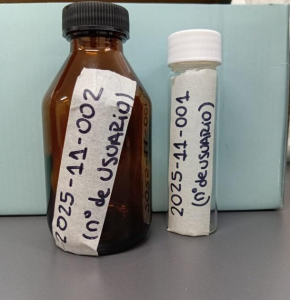
Figure 3: labeling on sampling containers, the labeling is organized with two series of numbers: (1) Year-month-service number and (2) user number (assigned once at the beginning of contact with the LAIE)
Once the file is completed, it must be sent by email. Subsequently, the corresponding budget will be delivered and sample reception will be coordinated.
Important: samples preserved with mercury will not be accepted.
These must be delivered to the LAIE, where the TOC-L CSH equipment is installed, located at the UNMDP annex (former Illia), Av. Juan B. Justo 2250 ground floor, on the previously agreed date and time.
Article 3: Service costs
The service is provided through a STAN (High-Level Technological Service) of CONICET.
The cost will be determined by the number of samples and the type of analysis required; by the condition in which the samples are presented (ready for analysis or requiring prior filtration in the case of DOC determination); as well as by the availability of vials provided by the applicant or, failing that, by the use of vials supplied by the LAIE.
Article 4: Priority of analysis performance and results delivery
If service demand is high, priority will be given to IIMYC members, secondly to requests coming from the scientific system of CCT CONICET Mar del Plata and UNMdP, and finally to the rest of the users.
Except in cases where demand exceeds the daily operational capacity of the laboratory, results will be sent to the contact email within a maximum period of 7 calendar days from sample reception.