Microbalance ORION CAHN C-33
Article 1: General information
The ORION CAHN C-33 microbalance has a precision of 0.001 mg and a maximum weighing range of 200 mg. Its use is strictly restricted to the preparation of samples intended for elemental analysis or isotopic ratio determination of the services offered by the laboratory. Its use is strictly restricted to these applications, in order to preserve its integrity, accuracy, and useful life.
To ensure its correct operation and minimize possible interference, the microbalance must be operated in a controlled environment, free from humidity and vibrations, using exclusively the specific weighing instruments. This includes antistatic tweezers, silica gel for humidity control, capsule holder, and appropriate sample holding elements, as illustrated in Figure 1.
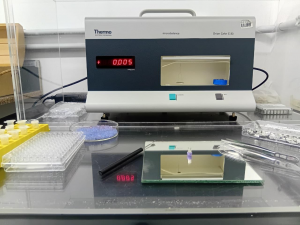
Figure 1. ORION CAHN C-33 microbalance together with weighing instruments.
It is important to note that, depending on the analyte to be determined, the material of the capsules to be used is selected:
Tin (Sn) capsules: intended for elemental analysis and/or determination of isotopic ratios of carbon, nitrogen, and sulfur.
Silver (Ag) capsules: used for elemental analysis and/or determination of isotopic ratios of oxygen and hydrogen.
Article 2: Sample presentation
Samples must be delivered dry, ground, and clean, free from visible contamination or excessive moisture, with a minimum mass of 300 mg.
They must be presented in perfectly sealed packaging (plastic vials, glass vials, or suitable bags) in order to preserve laboratory cleanliness and avoid any type of cross-contamination. It is recommended to use 3 mL snap-cap Eppendorf centrifuge tubes. Together with the samples, a clean 96-well tray must be sent to place the samples for subsequent analysis.
Each sample must be clearly identified, indicating its origin (animal, plant, soil, sediment, water, or other) and any additional information necessary for its traceability.
If the samples to be weighed are intended for analysis on the LAIE's IRMS-SERCON, the identification will be as follows:
Each service user will be assigned a single time an identification number, which must be mandatorily included in each group of samples sent. This procedure allows avoiding handling errors and cross-contamination of samples, situations that can lead to unreliable results.
Likewise, the year of shipment must be recorded together with the tray number, and the numbering of the trays must be consecutive, in order to facilitate long-term organization, traceability, and retrieval of results.
Example:
Dr. Juan Pérez, from IIMYC, is assigned the identifier CCI-0001.
The trays sent during the year 2025 must be labeled as follows:
-
CCI-0001 – 2025 – Tray No. 0533
-
CCI-0001 – 2025 – Tray No. 0534
-
etc.
User identification numbers: they are composed of a prefix indicating the type of applicant and a correlative order number.
The established prefixes are as follows:
CCI: Scientific community of IIMyC + order number
CCM: Scientific community of UNMDP + order number
CCE: Scientific community external to UNMDP + order number
CP: Private applicants external to the scientific community + order number
This identification system allows proper sample traceability, avoids handling errors, and facilitates the long-term organization and retrieval of analytical information.
Note: It is essential not to repeat the identification number of each tray, since the services will be recorded in a general database, with confidential and exclusive access of the LAIE. This system allows quickly locating and retrieving analytical results in the future, in response to any requirement or consultation need.
Article 3: Service request
1.- For researchers/fellows belonging to IIMYC:
The initial service management must be carried out exclusively through the IIMYC's Internal Tickets system:
www.IIMYC.gob.ar → IIMYC internal → service request → send ticket → "isótopos estables/TOC-L" CPA Agustina Pardini.
The request ticket must specify: (1) personal email, (2) Research group, (3) Director, (4) Number of samples, (5) General characteristics of the samples. Likewise, a contact email address must be provided to facilitate communication with the LAIE.
2.- For service applicants external to IIMYC:
The initial management must be done by email (laie.iimyc@mdp.edu.ar or agustinapardini@mdp.edu.ar) with the subject "microbalance service".
The body of the email must specify: (1) personal email, (2) Research group, (3) Director, (4) Number of samples, (5) General characteristics of the samples.
Within 72 hours after the request, you will receive an email from the responsible CPA of the LAIE, in which you will be asked for detailed information about the samples and the analyses you wish to perform. This information includes:
(1) Service user; (2) Total number of samples; (3) Distribution of samples according to the type of analysis, specifying the analytes required in each case: a.- Elemental analysis only; b.- Isotopic ratio analysis only; c.- Elemental analysis and isotopic ratio simultaneously.
Article 4: Service cost
The service is provided through a STAN (High-Level Technological Service) of CONICET.
The service includes weighing and encapsulation of samples: capsules for analysis can be provided by the applicant or supplied by the laboratory at an additional cost.